Key Milestones of the Virginia Natural Heritage Program, Decade by Decade
To keep every cog and wheel is the first precaution of intelligent tinkering - Aldo Leopold
1986–1989
Goshen Pass, DCR's first Natural Area, acquired 1956
1986: August 7, Virginia Natural Heritage Program becomes the 43rd state natural heritage program launched by The Nature Conservancy. First director Mike Lipford.
1989: DNH Ecologists collected data on the first vegetation plots at First Landing State Park. These data form the basis for development of The Natural Communities of Virginia classification.
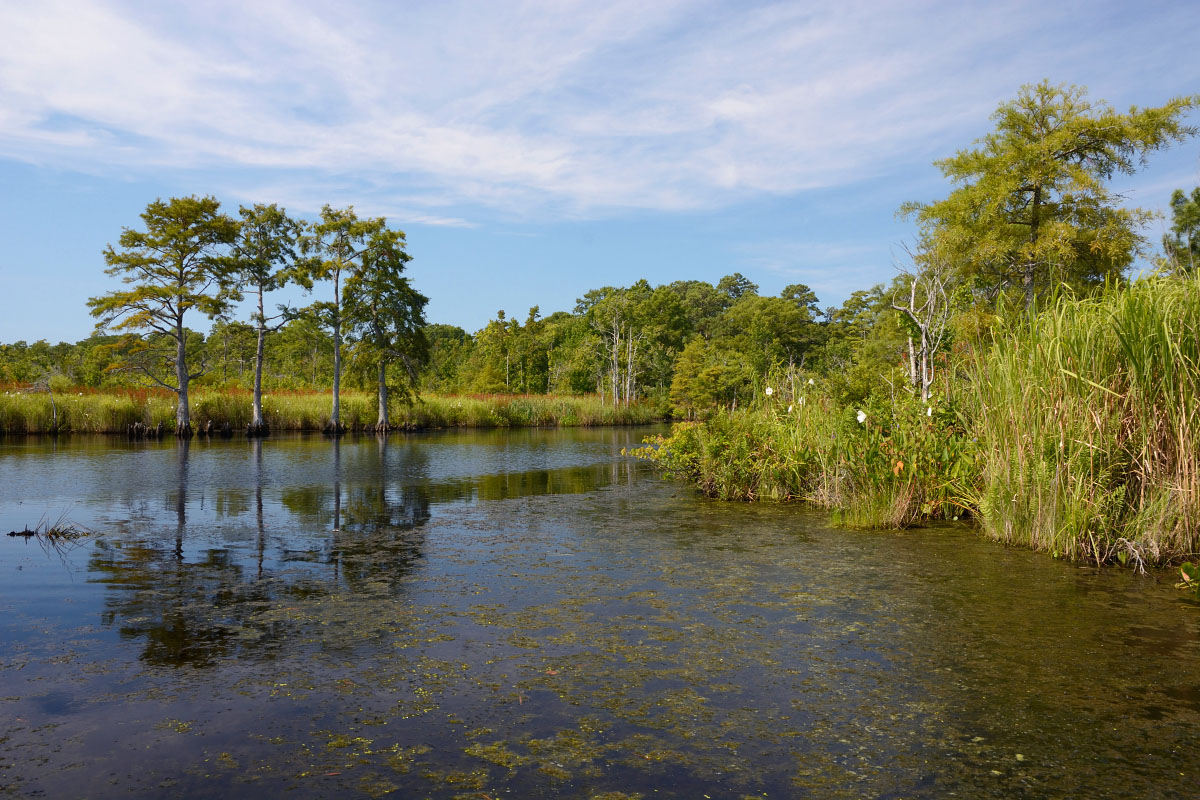
North Landing River, First Natural Area Preserve, 1990
1990: First Natural Area Preserve, North Landing River, established. Tom Smith becomes director.
1990: Zoologists rediscovered the federally endangered Dwarf Wedgemussel in Virginia. This species had been feared extirpated in the state.
1992: Virginia voters approved the Parks and Recreational Facilities Bond including $11.475 million for natural area acquisition.
1993: First project entered into the Environmental Review database.
1994: Karst Groundwater Protection Project established in Dublin. (1979 Cave Protection Act and creation of Cave Board) creating Karst Groundwater Protection Program in Natural Heritage, funded by U.S. Environmental Protection Agency.
1994: The Virginia Natural Heritage Program recognized by NatureServe as Outstanding Natural Heritage Program (also later in 2006 and 2016).
1995: The Natural Heritage Program the second state agency to launch a web site
1999: Zoologists, working with collaborators, documented 11 new sites for the federally endangered Mitchell’s satyr, a globally rare butterfly that was first found in the state during the previous year.
1999: DCR designated lead agency for statewide Conservation Lands Database with Natural Heritage taking the lead.
1990-1999: North Landing River, Bethel Beach, Big Spring, Johnsons Creek, Poor Mountain, Wreck Island, Bush Mill Stream, Pinnacle, Hughlett Point, Pickett’s Harbor, Northwest River, Grafton Ponds, Blackwater Ecological, Chub Sandhill, Antioch Pines, Buffalo Mountain, Cumberland Marsh, New Point Comfort, Cape Charles, The Cedars, Cowbane Prairie, Savage Neck Dunes, Pedlar Hills Glades, Grassy Hill, Folly Mills Creek Fen, Dameron Marsh, Dendron Swamp, Parkers Marsh Natural Area Preserves acquired.
Boltonia montana, Valley Doll's-Daisy, new plant species described in 2006.
2000: The Nature Conservancy transferred the leadership of Natural Heritage programs to Association for Biodiversity Information, which becomes NatureServe in 2001.
2000: New Access database implemented for tracking project reviews.
2001: Natural Heritage database transitions from Biological and Conservation Data system (DOS-based) to Biotics (GIS-enabled with about 5,700 species' locations).
2002: Virginia voters approved the passage of the Parks and Natural Areas Bond that provided $13.2 million in funding for natural area preserve acquisition.
2006: Senior Botanist co-authored the description of the globally rare Boltonia montana as a species new to science known only from the Ridge and Valley of Virginia and New Jersey.
2007: 50th Natural Area Preserve, Camp Branch Wetlands, established.
2010: First listing of the natural communities of Virginia with state and global conservation ranks completed by Ecologists.
2011: First large-scale solar project reviewed by Virginia Natural Heritage.
2012: The Flora of Virginia published in November by the Flora Project, with DCR as its key partner; first update since Flora Virginica published in mid-1700's.
2012: Stewardship and Natural Heritage hosted the Natural Areas Association conference in Norfolk, VA.
2016: Jason Bulluck becomes director.
2019: Karst program hosted National Cave and Karst Management Symposium in Bristol, Virginia.
2019: ConserveVirginia launched as statewide conservation strategy.
2010-2016: Mill Creek Springs, Blackwater Sandhills, Dundas Granite Flatrock, Bald Knob Natural Area Preserves acquired.
2017-2019: 21 parcels totaling 1,443 acres added to existing natural area preserves.
2020: First Pollinator Smart facility certified (Cople Elementary School).
2021-2023: Botanists documented 13 new populations of Raven’s Seedbox (Ludwigia ravenii; G1G2/S1) bringing the total number of extant populations in the state to sixteen.
2023: The Karst Program, with Dr. Jerry Lewis, published The Groundwater Isopods of Virginia, which included descriptions of 23 species new to science, underscoring Virginia's cave and groundwater habitats as biodiversity hotspots.
2024: Zoologists rediscovered Appalachia hebardi, a globally rare grasshopper, in Virginia after an absence of records for more than 75 years.
2025: Ecologists sampled the 4,807th vegetation plot.
2025: Five Pollinator Smart facilities certified, and eight localities require pollinator best practices or certification for solar facilities.
2020-2025: Southside Savannah Natural Area Preserve dedicated, Eastern Divide, Brocks Gap Natural Area Preserves acquired.
2026: Zoologists databased the 97,000th moth specimen and 60,000th bee specimen processed by zoology lab staff and many dedicated volunteers.
1993-2026: Karst Program has worked with partner scientists to discover at least 50 new species of cave and karst spring endemic animals, most of which are known from only a handful of springs or caves.
2026: Natural Heritage celebrates its 40th anniversary with 10,913 mapped locations of 2,115 elements of biodiversity and 2,499 conservation sites. The Virginia Natural Area Preserve System now includes 69 Natural Area Preserves totaling over 66,000 acres dedicated to the protection of Virginia’s biodiversity.
 保育與休閒部


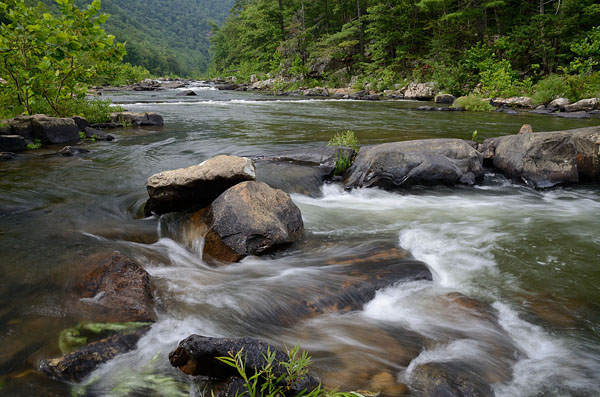 Goshen Pass, DCR's first Natural Area, acquired 1956